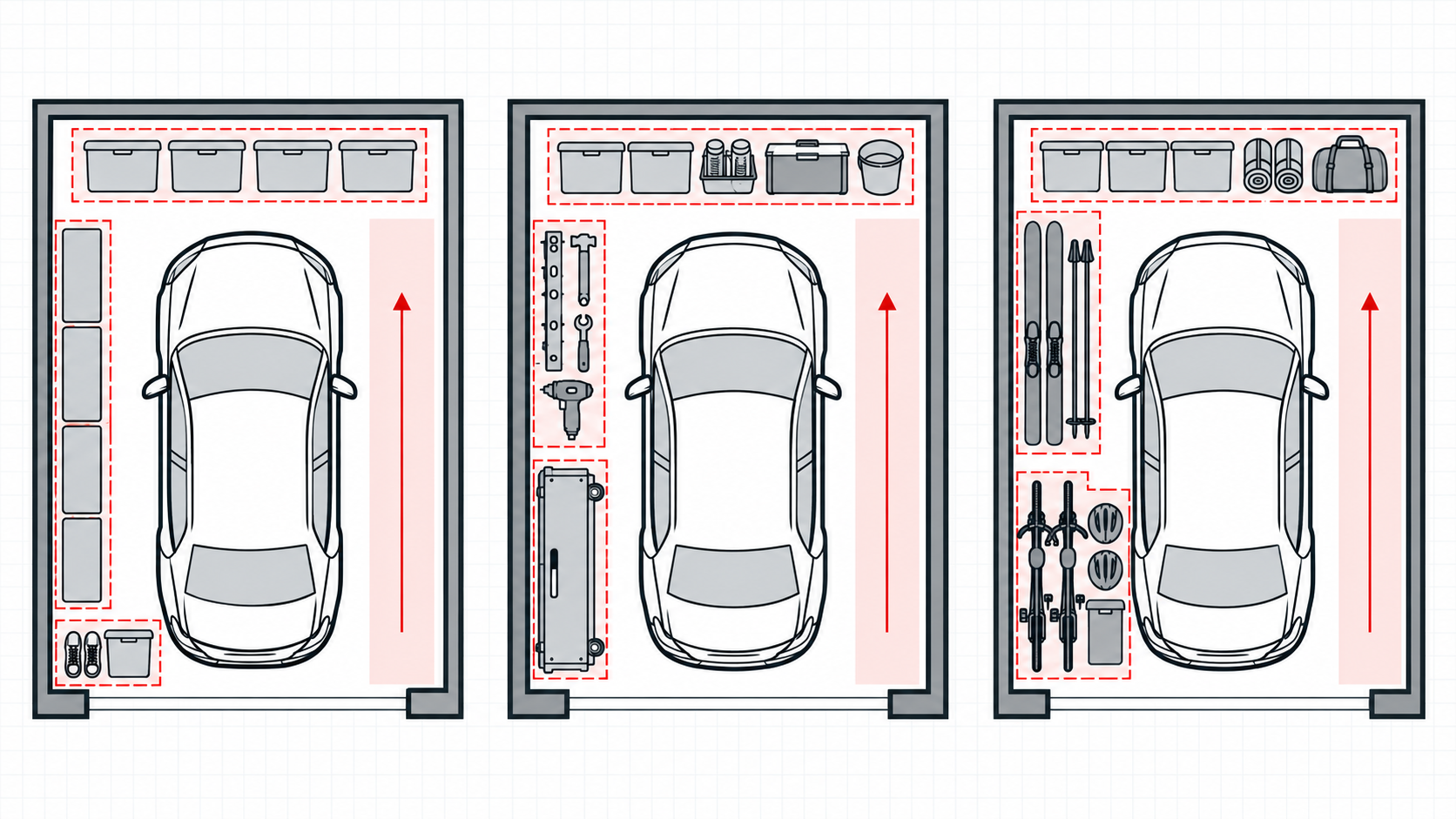
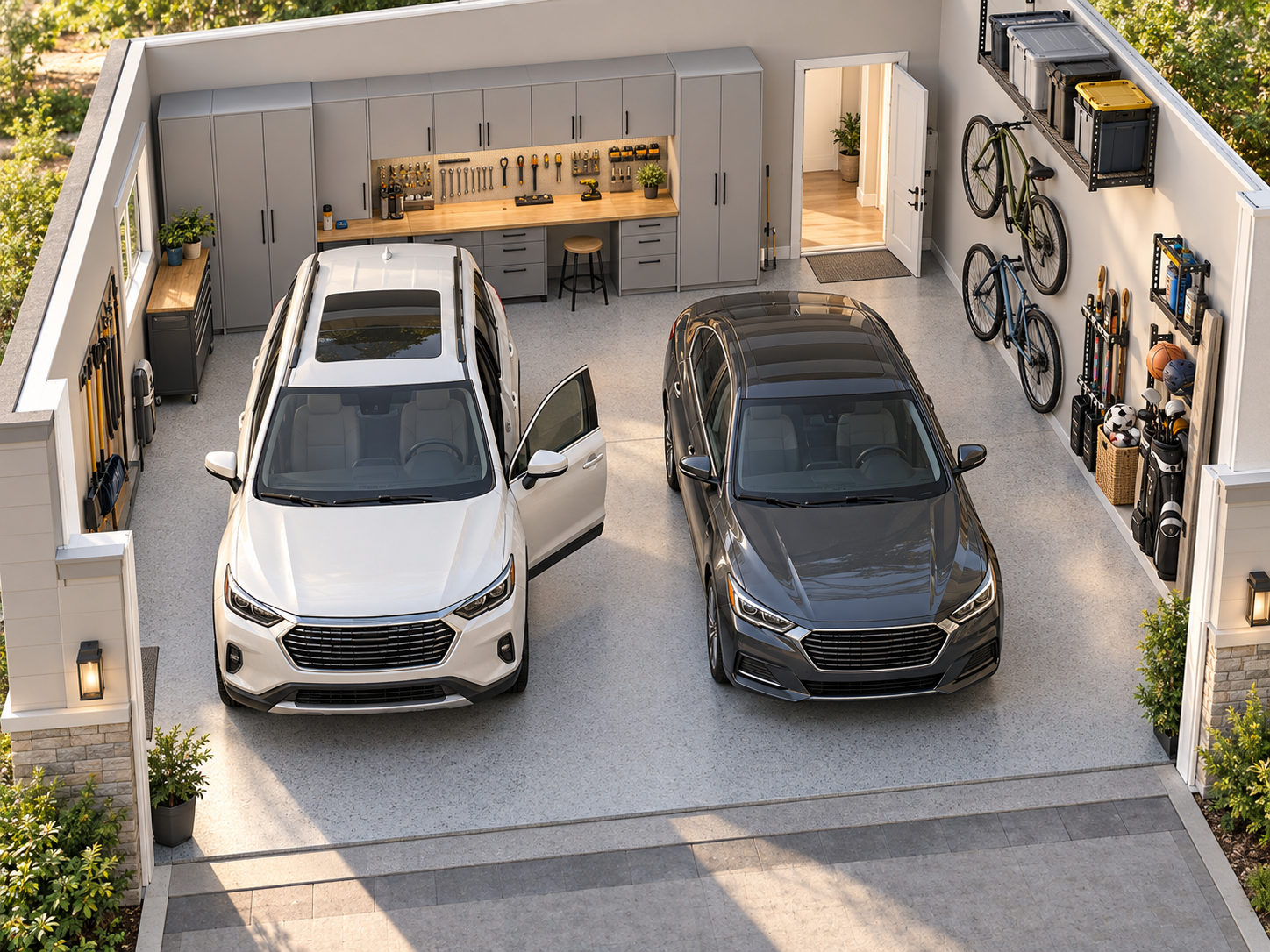
A Salt Lake City homeowner may need a compact tool station, while another needs multiple walls for skis, bicycles, camping equipment, and seasonal bins. For homeowners asking how much custom garage cabinets cost in Salt Lake City, a realistic planning budget is about $2,500 to $6,500 installed for a small cabinet run, $6,500 to $14,000 for a medium system, and $14,000 to $35,000 or more for a full-garage custom installation.
The final garage cabinet installation price depends on cabinet dimensions, layout, material costs, labor costs, hardware, accessories, and site conditions. This guide provides a practical cost breakdown, major cost drivers, estimating steps, and common garage organization scenarios in Utah.
Key takeaways
- A compact cabinet and workbench zone may cost approximately $2,500 to $8,000 installed.
- A medium cabinet run commonly falls between $6,500 and $14,000, depending heavily on drawers, worktops, and construction.
- A full-wall system or multi-wall garage storage system may cost $14,000 to $35,000 or more.
- Deep drawers, soft-close hinges, soft-close slides, locking cabinets, specialty storage, premium worktops, and difficult installation conditions raise the price.
- An in-home consultation, measurement appointment, and 3D design are the best way to turn a broad range into a project-specific estimate.
Typical price ranges in Salt Lake City
For a full-wall system, a practical planning range is approximately $400 to $900 per linear foot installed. Premium custom garage cabinets may reach $1,000 to $1,200 or more per linear foot when the design includes numerous drawers, upgraded construction, specialty hardware, or a premium worktop.
Custom-designed garage storage systems generally include professional measurement, a custom layout, cabinet and finish selections, hardware, and installation. Stock cabinets and RTA cabinets use predetermined dimensions. Semi-custom and modular cabinets provide more color options, sizes, and configurations, while fully custom systems can accommodate custom sizes, unusual walls, equipment, vehicles, and household routines.
Quick comparison by project size
These figures are planning ranges rather than fixed prices. Accurate estimates require measurements, material specifications, and an installation review.
What is usually included and excluded
Custom garage cabinet quotes in Utah may include an in-home consultation, measurement appointment, fully-customized garage designs with 3D renderings, finish selection, materials, fabrication, delivery, and professional design and install services. Ask whether the provider offers a 1-2 day design turnaround or whether the design schedule begins only after measurements and product selections are complete.
Demolition, disposal and haul-away, electrical work, drywall repair, painting, epoxy flooring, and specialty organizers may be excluded. If a design adds a charging station or task lighting, confirm whether a new GFCI outlet or other electrical work will be needed. A low cabinet price can produce a higher final project cost when preparation and add-ons are omitted from the original scope.
What drives the cost
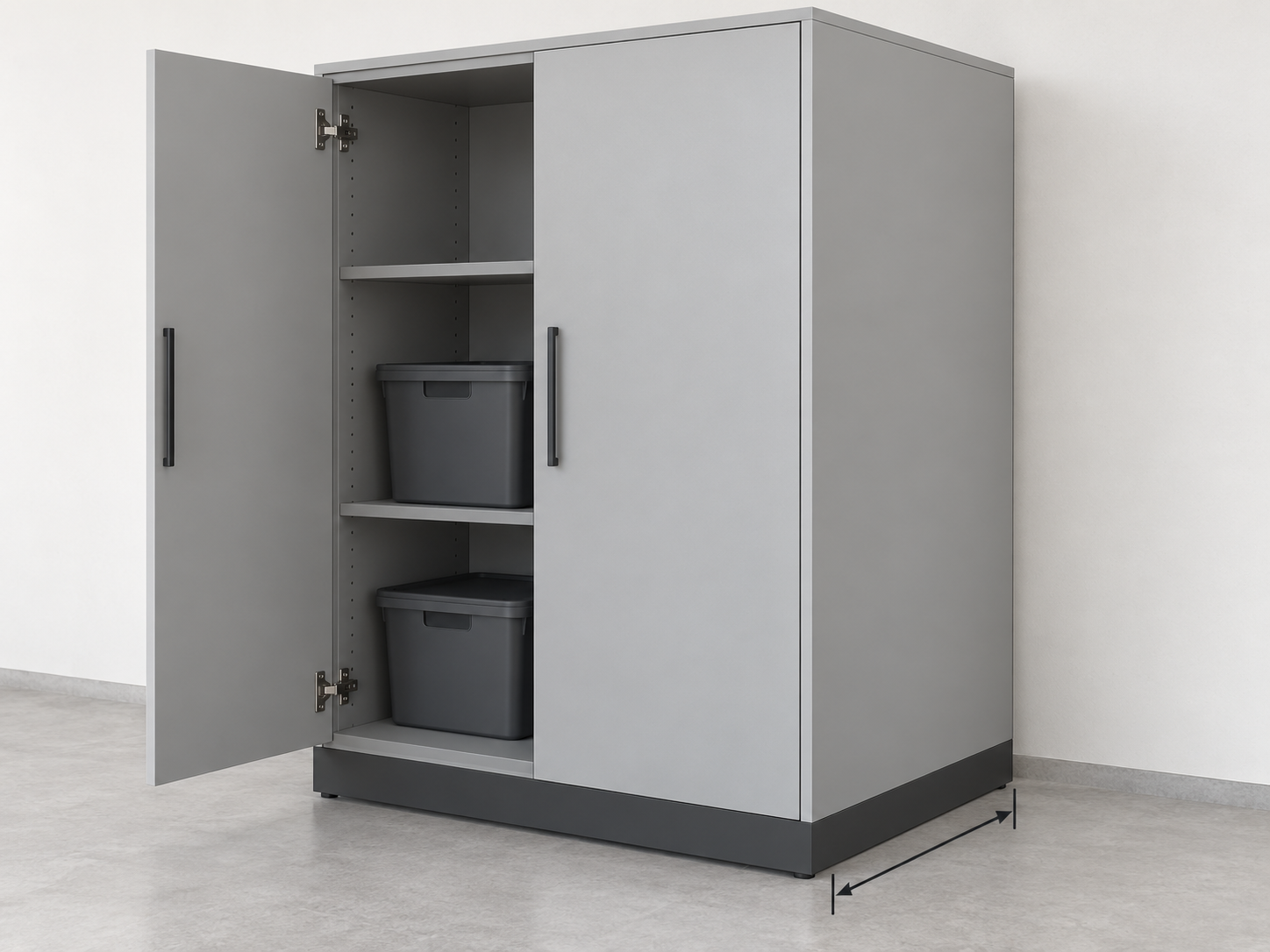
Cabinet quantity and layout complexity usually have the greatest influence because each additional unit adds material costs, hardware, assembly, and labor costs. Linear feet provide a starting point, but a drawer stack, corner solution, or tall utility cabinet costs more than an equally wide cabinet with two doors.
Materials establish the next major pricing tier. A laminate countertop or butcher block top and composite cabinet boxes generally cost less than premium plywood boxes, specialty surfaces, or a stainless steel worktop.
Materials and build quality
Melamine is frequently used for cabinet interiors and surfaces because it provides a clean, durable finish in many cabinet colors. MDF can create smooth doors for a painted finish or thermofoil surface, while plywood boxes may appeal to homeowners who prioritize layered wood construction and strong fastening points. The exact performance of wood cabinets depends on panel thickness, edge treatment, assembly method, and exposure conditions, not simply the material name.
Steel cabinets offer another option for homeowners who prioritize impact resistance and an industrial appearance. Powder-coated steel uses a powder coat finish that can improve surface durability, although cabinet gauge, seams, hardware, and coating quality still matter.
Salt Lake City temperature swings, garage humidity, wet snow gear, and road-salt residue make edge sealing, cabinet backs, ventilation, and supported shelving especially important. Ask for the shelf load rating in writing, including whether the rating applies to evenly distributed weight and the specified shelf width.
Doors, deep drawers, and hardware upgrades
Full-extension slides improve access to tools at the back of a drawer, while soft-close hinges and soft-close slides reduce impact during daily use. Locking cabinets, premium handles, and heavy-duty hardware increase cost but may be worthwhile for chemicals, power tools, and valuable equipment.
Fully custom cabinets become more expensive as the drawer-to-door ratio rises. Deep drawers and dedicated tool drawers require robust slides, precise assembly, and stronger construction, whereas a basic hinged-door cabinet has fewer moving components. Integrated toolboxes can further increase the price because they require specialized dimensions and hardware.
Worktops and workbench features
A laminate countertop is usually the economical choice. A butcher block top adds warmth and can work well for general household projects, although it needs appropriate maintenance. A stainless steel worktop costs more but can suit messy, moisture-prone, or heavy-use work areas.
A pegboard or slatwall above the workbench can keep frequently used tools visible and accessible. This may reduce the amount of enclosed cabinetry required, but integrated lighting, power access, and specialty hooks should be included in the quote.
Installation conditions in Salt Lake City homes
An uneven concrete slab, out-of-plumb walls, foundation ledges, and tight vehicle clearances increase installation labor. Fitted systems require careful leveling, spacing, clearance planning, and anchoring to studs or another approved structural surface so doors and drawers do not conflict with vehicles, garage-door tracks, utility panels, or entry doors.
Moisture management also affects placement near exterior walls. Wall conditions should be assessed before cabinetry conceals stains, gaps, or other signs of moisture movement.
How to estimate your budget in five steps
A reliable estimate begins with dimensions and storage categories rather than a desired cabinet count. This prevents homeowners from buying excessive enclosed storage while overlooking efficient wall hooks, shelving, or overhead space.
Step 1: Measure usable wall space and obstacles
Record wall length, ceiling height, windows, steps, outlets, water heaters, and electrical panels. Mark garage-door tracks and vehicle door-swing clearance because nominal wall space may not be usable cabinet space. A professional measurement appointment should verify these details before fabrication.
Step 2: Choose a cabinet type and durability level
Compare stock cabinets, RTA cabinets, modular cabinets, semi-custom cabinets, and fully custom cabinetry, then match construction to the stored items. Heavy tools, automotive fluids, bicycles, and seasonal bins impose different depth, load, ventilation, and security requirements.
Step 3: Choose must-have features before upgrades
Prioritize a broom cabinet, deep drawers, chemical storage, locking cabinets, or adjustable shelves before aesthetic upgrades. Add a workbench, pegboard, bike rack, sports gear storage, overhead storage racks, integrated toolboxes, LED task lighting, or charging station only after essential storage receives adequate space.
Step 4: Budget for labor, preparation, and add-ons
Account for old-shelf removal, disposal and haul-away, wall patching, trim changes, leveling, anchoring, and electrical work. These tasks may appear minor, but they can extend installation when the garage was not built for fitted cabinetry.
If epoxy flooring is part of the broader garage upgrade, coordinate the cabinet and flooring schedules before installation begins. The sequence can affect cabinet height, wall access, floor preparation, and the final fit.
Step 5: Request comparable quotes
Ask each installer to price the same dimensions, material, finish, hardware tier, worktop, and accessory package. Compare design services, installation, disposal and haul-away, lead times, and warranty terms rather than bottom-line totals alone.
For lifetime/7-year warranties or other tiered coverage, ask exactly which cabinet boxes, finishes, hinges, slides, labor, and accessories are protected. The most useful warranty comparison is based on written exclusions and service terms, not the headline duration.
Realistic examples for Salt Lake City garages
These scenarios are planning models, not fixed market prices. The difference between basic, upgraded, and premium projects typically reflects construction quality, drawer quantity, finish durability, and accessory integration rather than cabinet length alone.
Example 1: One-wall storage and workbench
A base-cabinet run with upper cabinets, a countertop, and several drawers may cost $5,000 to $10,000 installed. Door-heavy storage stays near the lower end, while deep drawers, soft-close hardware, integrated toolboxes, and a stainless steel worktop push the same footprint upward.
Example 2: Two-car garage full system
Multiple walls, a tall cabinet, slatwall or pegboard, corner storage, a bike rack, sports gear storage, and overhead storage racks may cost $12,000 to $25,000 or more. Premium finishes, overhead components, locking cabinets, and integrated organizers can move a comprehensive package beyond that range.
A flexible layout often combines enclosed cabinets for visual order with open storage for frequently used equipment. Although fully custom systems can support endless configurations, the best design uses only the features that improve everyday access and vehicle clearance.
Example 3: Tight single-car or townhome garage
Shallow upper cabinets and a compact base run may cost $3,000 to $8,000 while preserving parking clearance. Although the footprint is smaller, nonstandard depths and difficult anchoring can make the cost per linear foot higher.
Example 4: Mudroom-style garage storage
A mudroom-style garage can combine tall cabinets, cubbies, hooks, shoe storage, and a bench for coats, backpacks, snow gear, and seasonal storage. The price depends on whether the design uses mostly open compartments or adds doors, drawers, custom seating, and premium finishes.
Common cost mistakes to avoid
Under-scoping creates poor storage zones, inadequate drawers, and unused vertical space, often forcing homeowners to add mismatched products later. Overbuilding creates the opposite problem by placing expensive cabinetry where adjustable shelving, a pegboard, a bike rack, or overhead storage racks would perform better.
Another mistake is choosing from cabinet colors and color options before deciding what the system needs to store. The layout, shelf load rating, drawer capacity, moisture resistance, and clearance planning should be resolved before decorative selections.
DIY versus professional installation
DIY garage cabinets can make sense when using freestanding stock, RTA, or modular cabinets in a garage with straight, unobstructed walls. Poor leveling or inadequate anchoring to studs can create unsafe cabinets, damaged walls, and unusable clearances that erase those savings.
Professional installation is generally the safer choice for full-height cabinets, heavy worktops, wall-hung systems, uneven floors, or layouts near garage-door equipment and utilities. It also establishes clearer responsibility for field measurements, secure anchoring, alignment, fit adjustments, and warranty service.
How to vet an installer and quote
Request an itemized quote covering cabinet boxes, doors, drawers, hardware, worktop, material costs, labor costs, delivery, installation, preparation, and disposal. Confirm the expected timeline and process for handling unexpected wall or floor conditions.
Ask to see fully-customized garage designs with 3D renderings before approving fabrication. A useful 3D design should show cabinet dimensions, door and drawer clearance, vehicle placement, work surfaces, electrical access, and specialty storage.
Where a free consultation helps most
A free in-home consultation is most useful when measurements, vehicle clearances, and storage categories are documented before design begins. A measured 3D plan can expose conflicts and reduce change orders because homeowners see the proposed layout before production.
Reviewing different garage cabinets configurations can clarify which depths, drawer arrangements, cabinet colors, and workbench features belong in a consistent quote specification.