A Salt Lake City garage can quickly become a catch-all for vehicles, tools, outdoor equipment, seasonal décor, and family supplies. The most practical garage storage ideas Salt Lake City homeowners can apply begin with measured zones rather than an assortment of unrelated products.
Effective garage organization may combine garage lockers, a garage workbench, wall storage, cabinets, and overhead racks. This guide explains how to select and position each element, including how 3D renderings can reveal clearance problems before installation.
Start With a Clear Garage Storage Plan
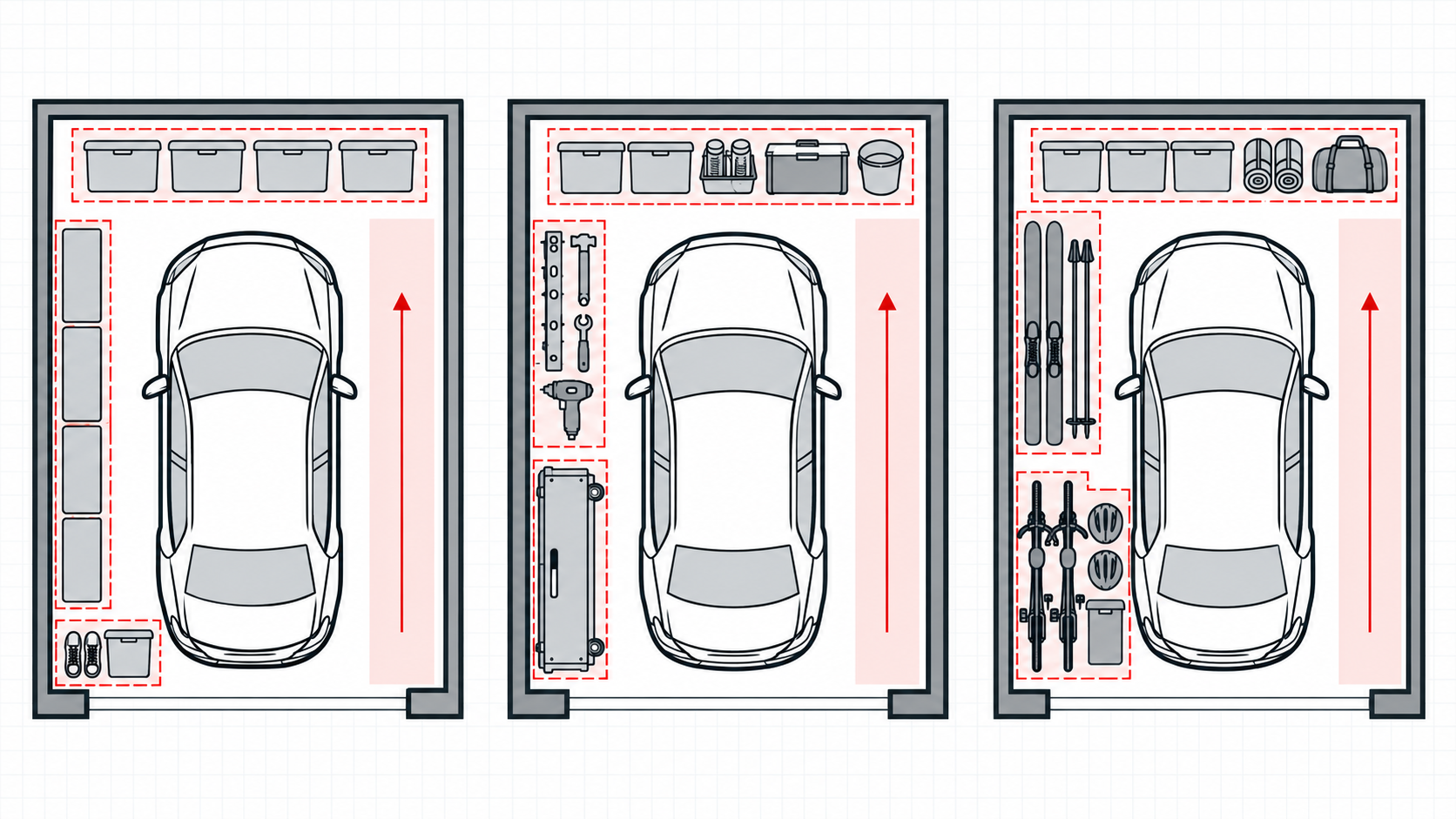
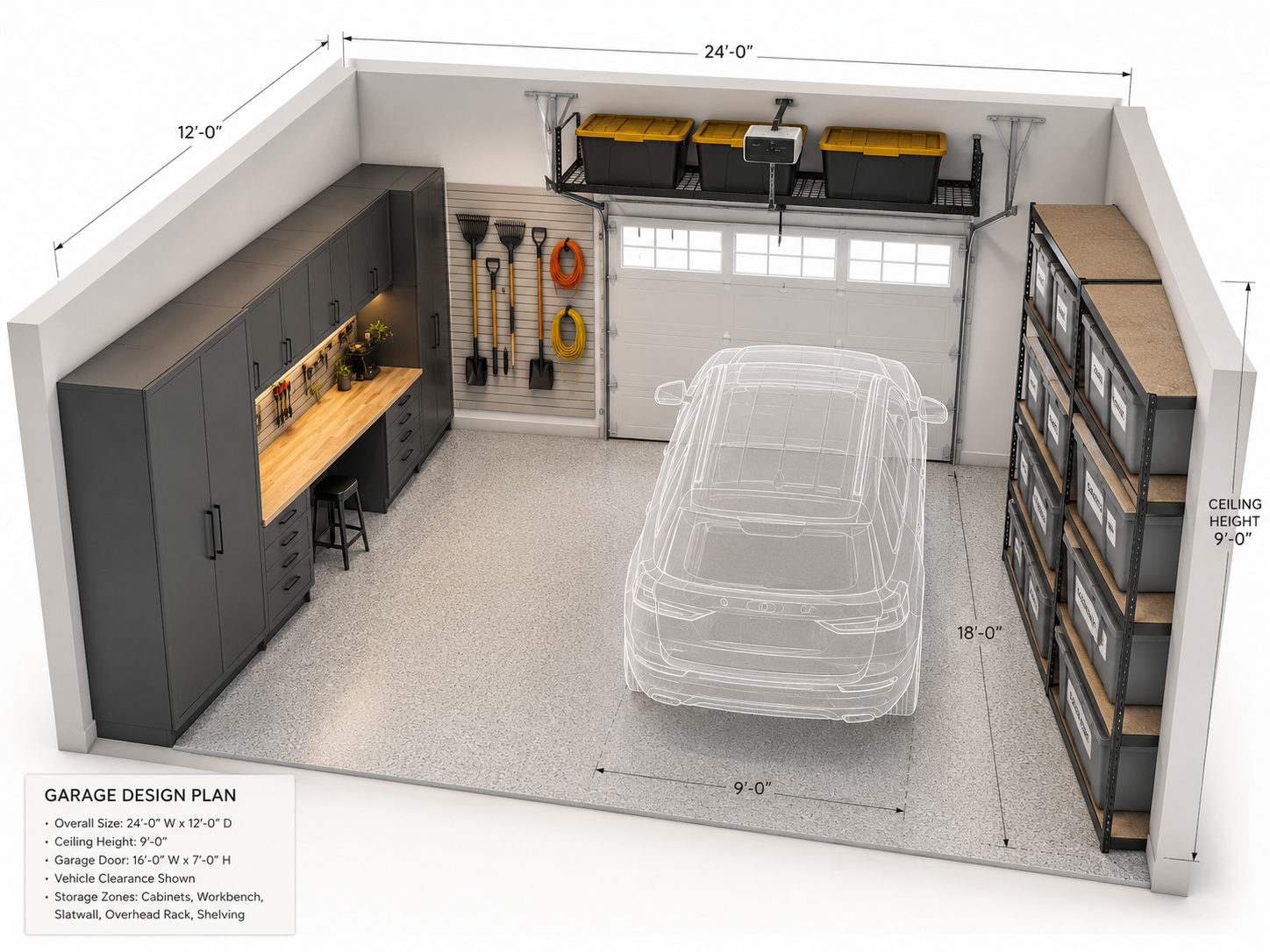
The objective is not to cover every wall with storage racks, but to preserve distinct parking, walking, working, and storage areas. Measure wall width, ceiling height, garage door clearance, vehicle doors, tracks, openers, outlets, and electrical panels before selecting tool storage or seasonal storage.
Fully customized garage designs with 3D renderings can test those measurements against actual cabinet and rack dimensions. Perfect Garage Storage offers a one- to two-day design turnaround, while its lifetime and seven-year warranties vary by product, making warranty terms and load requirements worth reviewing before installation.
Sort Items by How Often You Use Them
Keep daily, weekly, and heavy items in the ergonomic 18-to-50-inch power zone, between knee and shoulder height, to reduce bending and climbing. Holiday decorations, camping bins, and other infrequently used belongings can occupy high shelves or rated overhead racks.
Create Zones Before Buying Storage
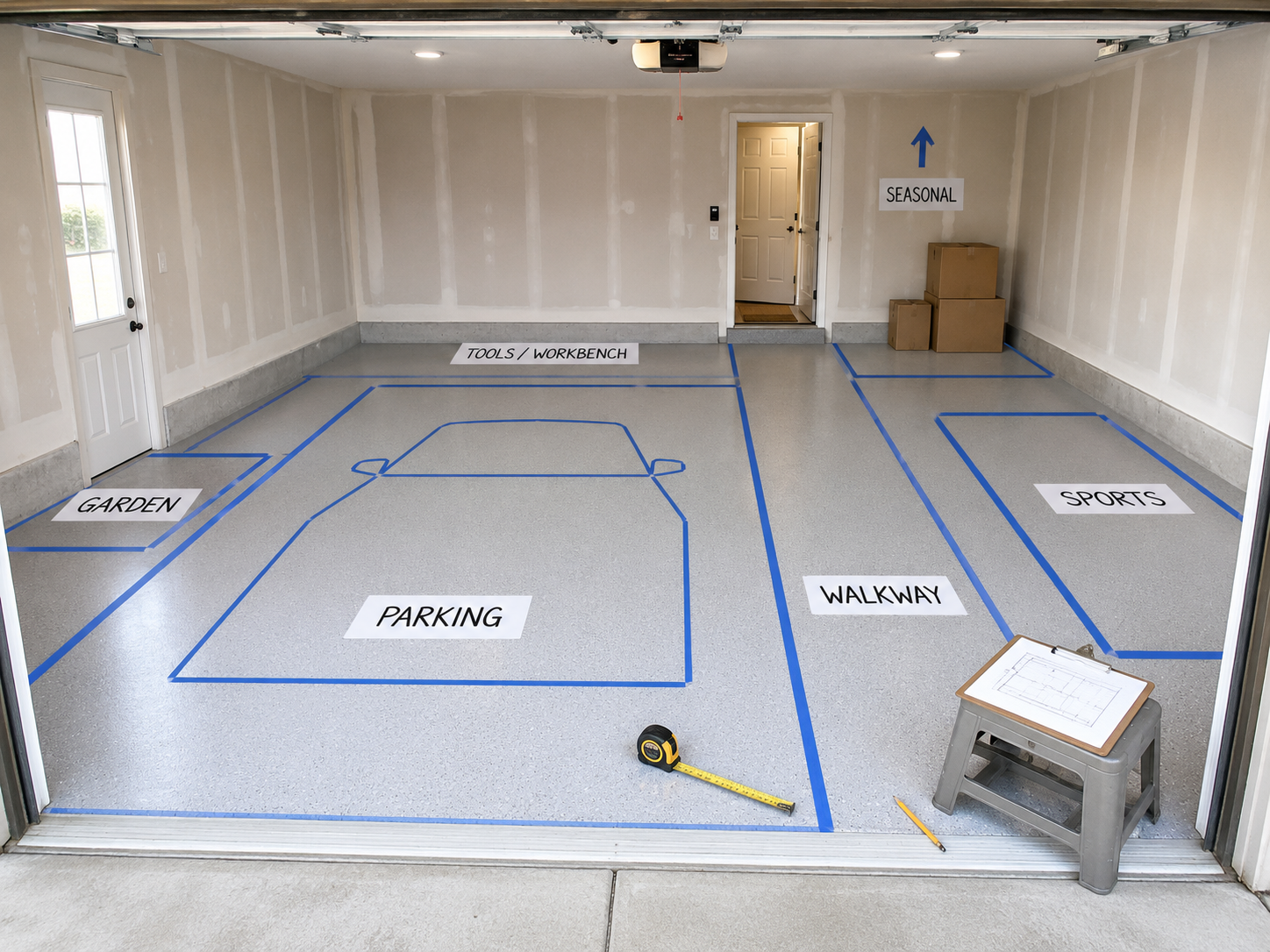
Mark zones for parking, sports, gardening, tools, bulk storage, and seasonal equipment on a basic floor sketch. This step prevents cabinets from obstructing doors and keeps storage outside vehicle and walking paths.
Use Wall Storage to Keep the Floor Clear
Wall-mounted storage produces the quickest visible improvement because it moves equipment away from tires, foot traffic, and floor drains. Use shelving for storage bins, slatwall for adjustable accessories, and cabinets for supplies that need concealment or protection.
Wall construction determines whether a system can support its stated load, so fasteners must connect to suitable framing or masonry. For wall-mounted racks, use the manufacturer-specified fasteners to attach directly to structural wall studs rather than drywall alone, because the safe load depends on both the rack and its supporting structure.

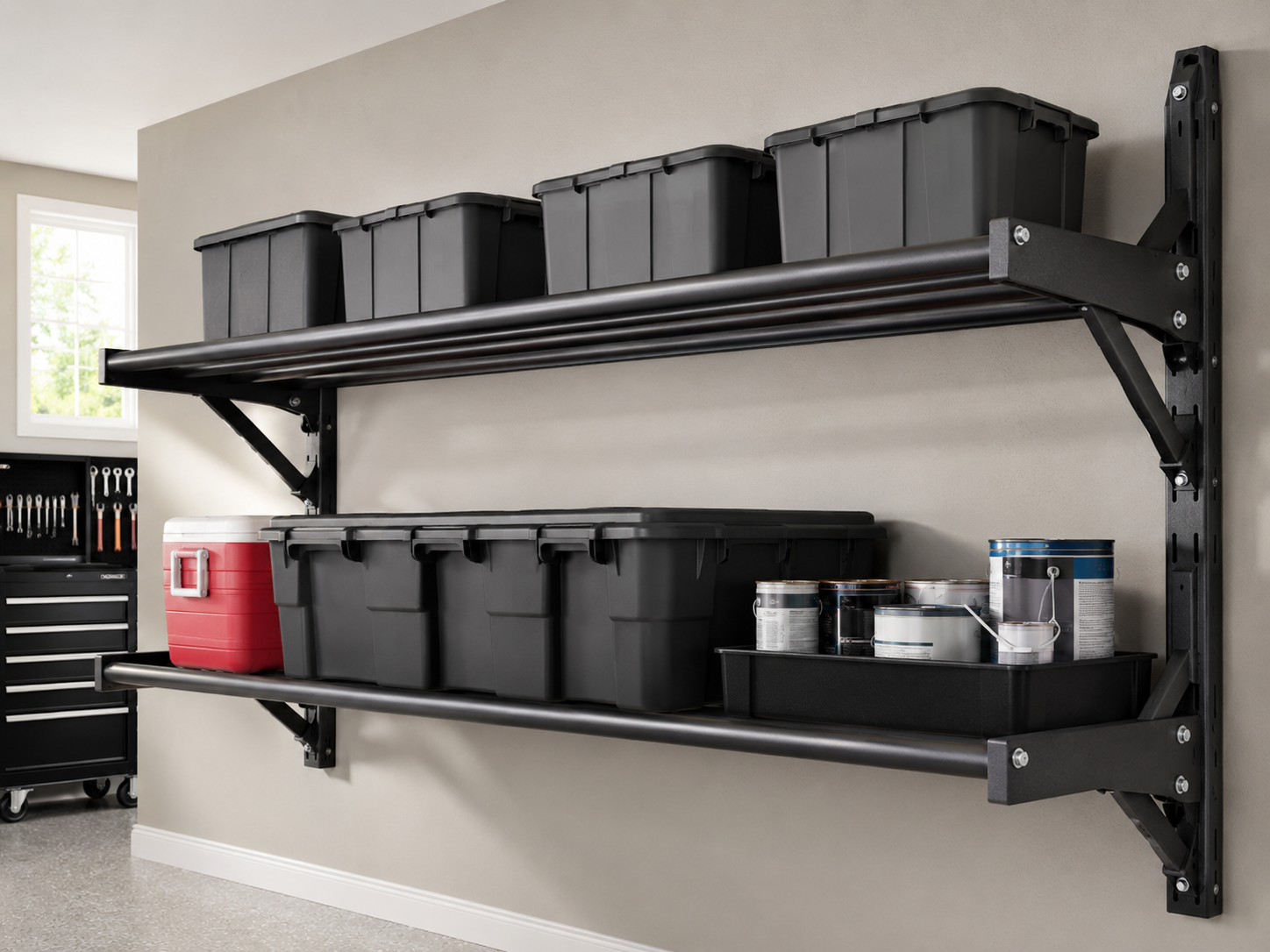
Choose Heavy-Duty Shelving for Bulky Items
Deep garage shelving suits labeled bins, coolers, paint supplies, and larger tools. Perfect Garage Storage uses Monkey Bars shelving rated for up to 1,000 pounds per four feet, but weight limits still require even weight distribution, correct installation, and compliance with manufacturer instructions.
Professional installation can reduce uncertainty about framing, anchors, and shelf spacing. Heavy containers should remain on lower levels to limit lifting risk.
Add Slatwall for Flexible Everyday Storage
Slatwall hooks, baskets, and holders organize rakes, shovels, helmets, cords, and hand tools without fixing each item permanently in place. Grouping related equipment together makes the layout easier to adjust as children grow or family activities change.
Choose Cabinets for Clean, Protected Storage
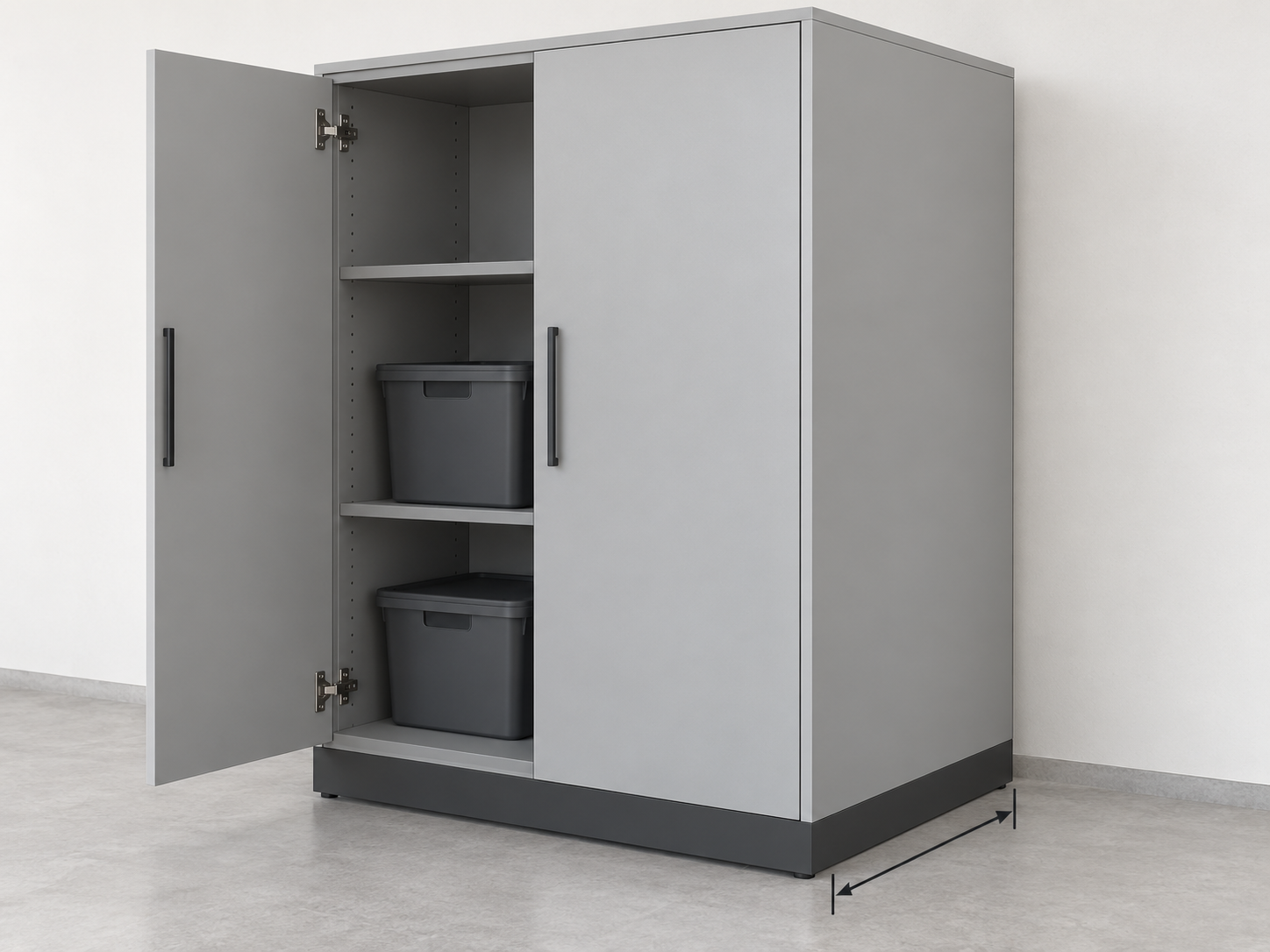
Custom garage cabinets reduce visual clutter while shielding supplies from dust, moisture, and routine temperature changes. Closed storage works well for power tools, automotive products, chemicals, and small objects that create disorder on open shelves.
Choose durable materials, garage-rated hardware, and raised bases, legs, or wall-mounted construction. Elevating cabinets helps protect their lower edges from wet vehicles and makes floor cleaning easier.
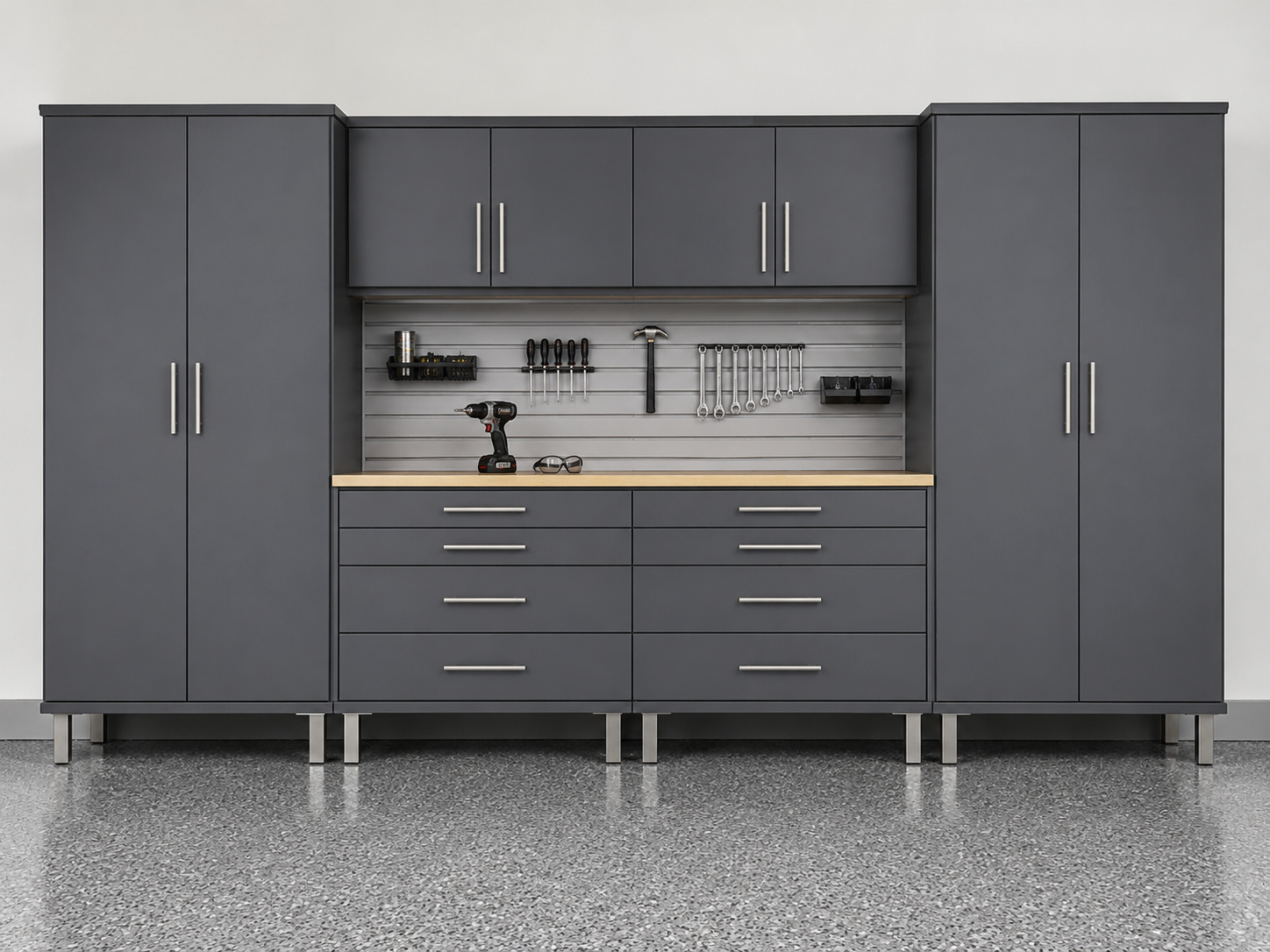
Plan Cabinet Layouts Around Your Work Area
Position a garage workbench, charging station, and pull-out drawers near the tools used for DIY or vehicle maintenance. Tall cabinets can hold brooms and long-handled tools, while shallow drawers keep small parts visible and separated.
Keep Hazardous Products Secure
Read and follow the manufacturer’s label-specific storage instructions for fuel, pesticides, cleaners, and other chemicals, and keep them away from ignition sources. Keep products in their original containers, and use lockable cabinets to add essential access control when children or pets enter the garage.
Make Space for Salt Lake City Outdoor Gear
Salt Lake City averages 51.9 inches of snowfall annually, with snow occurring mainly from November through April, so seasonal organization can be especially useful. Organize equipment by season, but keep year-round items such as bicycles and strollers within easy reach.
Clean and dry equipment completely before storing it because trapped moisture encourages odors, corrosion, and material damage. For off-season ski storage and snowboard storage, a cool, dry, climate-controlled indoor space helps avoid the temperature swings and humidity associated with garages and sheds.
Store Ski and Snowboard Equipment Safely
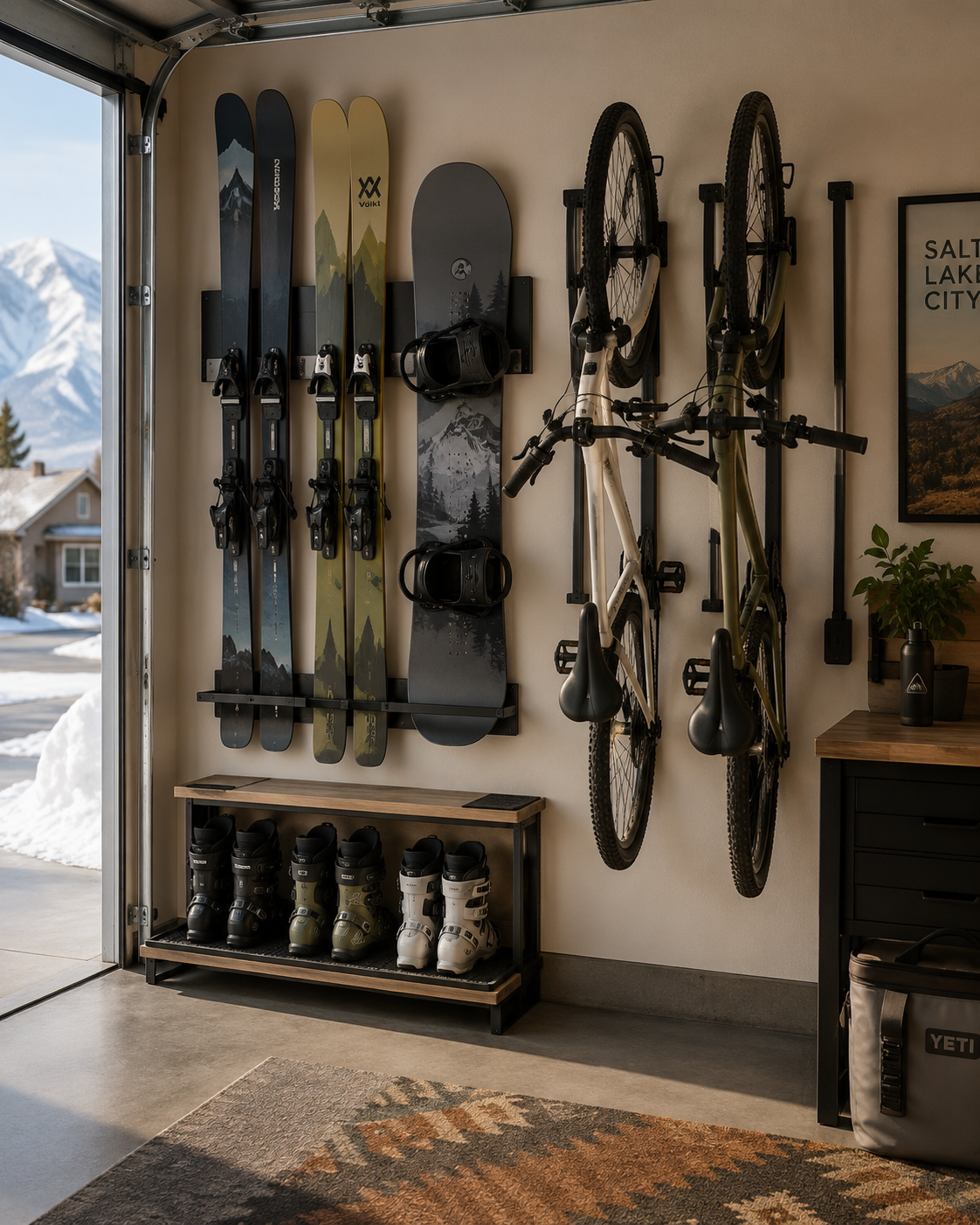
Dedicated wall racks or vertical holders keep skis and snowboards away from damp concrete. Dry boots and outerwear first, then position sharp edges outside vehicle paths and beyond children’s reach.
Set Up Bike and Sports Gear Storage
Use rated bike hooks, vertical racks, or pulley systems only where ceiling height and vehicle clearance permit safe operation. A labeled bin, hook, or garage-locker section for each family member prevents helmets, balls, and bags from migrating into walkways.
Keep Camping Gear Easy to Find
For camping gear storage, group tents, sleeping bags, coolers, and cooking bins in one labeled zone. Keep frequently used gear on accessible shelving, while lighter off-season bins can move to approved overhead storage.
Use Overhead Storage for Seasonal Items
Overhead racks are most suitable for lightweight or moderate seasonal loads that need access only a few times each year. Matching lidded bins improve stacking consistency, while labels facing the garage entrance identify contents without unloading the rack.
Maintain clearance around garage doors, openers, lights, and fire-safety equipment. Storage that interferes with moving hardware can damage property even when the rack itself remains secure.

What Belongs on an Overhead Rack
Good candidates include holiday decorations, empty luggage, seasonal clothing, and occasional camping supplies. Heavy, fragile, leaking, or frequently needed items belong on lower shelving or inside cabinets.
Check Ceiling Structure and Safe Clearances
Overhead racks must connect to appropriate structural framing and remain within the manufacturer’s load capacity. Because finished ceilings can conceal framing direction and condition, professional assessment is prudent for heavy or custom installations.
Build a Garage Gardening and Utility Station
A dedicated garage gardening station keeps potting supplies, hoses, soil, lawn tools, and cleaning products from spreading across multiple walls. Sealed bins and spill trays contain fertilizer and soil, which reduces mess and discourages pests.
Place a wall-mount hose reel near the exterior water connection while leaving enough space to prevent kinks. A polyurethane garden hose can be easier to manage than a heavier hose, but the location should still keep wet hoses away from electrical equipment and walking routes.
Keep Garden Tools Visible and Off the Floor
Hang rakes, shovels, pruners, and hoses on hooks or tool holders near the exterior door. A small shelf or cabinet can contain gloves, seeds, plant food, and hand tools without consuming valuable floor area.
Add Better Lighting Where You Work
Use LED garage lighting that provides 300 to 500 lux for general workshop lighting and 500 to 1,000 lux for bench tasks to improve task visibility and make labels easier to read. Position fixtures where open garage doors, overhead racks, and stored bins cannot block the light.
Finish the Space With Flooring and a Coordinated Layout
Garage flooring can make a finished storage system easier to clean and help define parking, work, and storage zones. It works best as part of a coordinated plan that accounts for cabinet bases, wall storage, overhead clearances, and the way the garage is used each day.
Whether you are in Salt Lake City, Park City, South Jordan, or Draper, a measured design can help you select storage that fits the garage rather than forcing the garage to fit a collection of products.
Avoid Common Garage Storage Mistakes
Buying generic products before measuring often creates unusable gaps, blocked doors, or shelves that conflict with vehicles. Opaque, unlabeled containers create another problem because finding one object requires opening multiple bins.
Keep the floor open for parking, drainage, cleaning, and safe movement. Reassess the arrangement after each season, then remove broken, unused, or outgrown items before they consume permanent storage space.
Do Not Overload Racks, Shelves, or Hooks
Follow the stated limit for every shelf, rack, hook, and fastener, and distribute weight across the supported area. Unless a system is engineered for elevated heavy loads, place dense items on lower shelves.
Do Not Block Safety and Access Points
Electrical panels, water shutoffs, doors, and garage controls require unobstructed access. Maintain a direct route between the garage and home, with cords, tools, and bins kept outside that path.
Know When a Custom Layout Makes Sense
Custom garage storage systems become useful when a garage has unusual dimensions, multiple functions, limited wall area, or substantial outdoor equipment. A measured plan and 3D rendering can show how cabinets, garage slatwall, shelving, and overhead racks relate to vehicles before holes are drilled.
The sound planning sequence remains consistent: declutter first, establish zones, store by frequency, and select durable systems suited to the expected load. That sequence matters more than filling the garage with the greatest possible number of components.
Signs Your Garage Needs Professional Design Help
Consider professional planning when vehicles no longer fit, stored items regularly fall, or wall and ceiling mounting requirements remain uncertain. Perfect Garage Storage’s experience with custom-designed garage systems supports a measured, use-based method rather than a one-size-fits-all arrangement.