A Salt Lake City garage often becomes the house’s overflow room long before it becomes a functional shop. For homeowners searching for Garage Tool Storage Ideas for Utah Homeowners, the right answer is usually a zone-based plan that combines garage organization, pegboards, garage storage systems, and, when needed, Custom-designed garage systems.
Start With How Your Salt Lake City Garage Is Used (Not With Bins)
Most garage clutter comes from unplanned storage, not from a shortage of shelves or bins. In Utah homes, tools compete with lawn and garden equipment, automotive and power tools, bicycles, and sports gear like skis and camping supplies, so random containers only hide the conflict instead of solving it.
Make the list explicit: tools, yard equipment, camping gear, and sports gear storage all need different access and protection levels. A successful garage supports daily behavior, which means faster find-and-put-away cycles, clear walking paths, protected tools, and room for vehicles or a workbench. At Perfect Garage Storage, that pattern shows up repeatedly: garages become manageable when each category has a defined role, not when everything gets packed into matching plastic.
Quick Inventory: What You Own and How Often You Touch It
Start by sorting everything into daily or weekly use, monthly or seasonal use, and rare or long-term storage. This frequency test matters more than product choice because access needs should drive layout, whether you build it yourself or study fully-customized garage designs with 3D renderings.
Flag bulky items such as coolers, ski bags, and storage totes early, and mark heavy items such as compressors and loaded tool chests separately. Also flag small, easy-to-lose items like drill bits and saw blades so they get a dedicated drawer or organizer from day one. Heavy and oversized gear determines shelf depth, wall reinforcement, and hardware selection, which is why many premium cabinet brands back their systems with a limited lifetime warranty when installed under their stated conditions.
Make a Simple Storage Map (Zones) Before You Buy Anything
Sketch six zones before purchasing anything: tool zone, DIY or workbench zone, yard zone, sports zone, winter zone, and bulk overstock zone. A garage map prevents the common mistake of buying attractive storage that does not fit how the room functions.
Put tools near the bench, yard gear near the exterior door, and seasonal items higher up or farther back. Even a rough plan creates clarity, and homeowners reviewing professional concepts often value a fast design turnaround with a visual layout because it reduces expensive layout mistakes.
Step-by-Step: Build Dedicated Tool Zones That Stay Organized
The rule that keeps a garage stable is straightforward: every tool needs one home and one return path. That principle reduces countertop creep and floor drift because people put tools away faster when the destination is obvious and close.
Keep high-frequency tools between shoulder and knee height, where they are safer to lift and easier to see. Separate clean storage from dirty storage, since fasteners and power tools last longer when they are not sharing dust and moisture with shovels, muddy boots, or leaf equipment.
Workbench Zone: The Anchor for Hand Tools and Power Tools
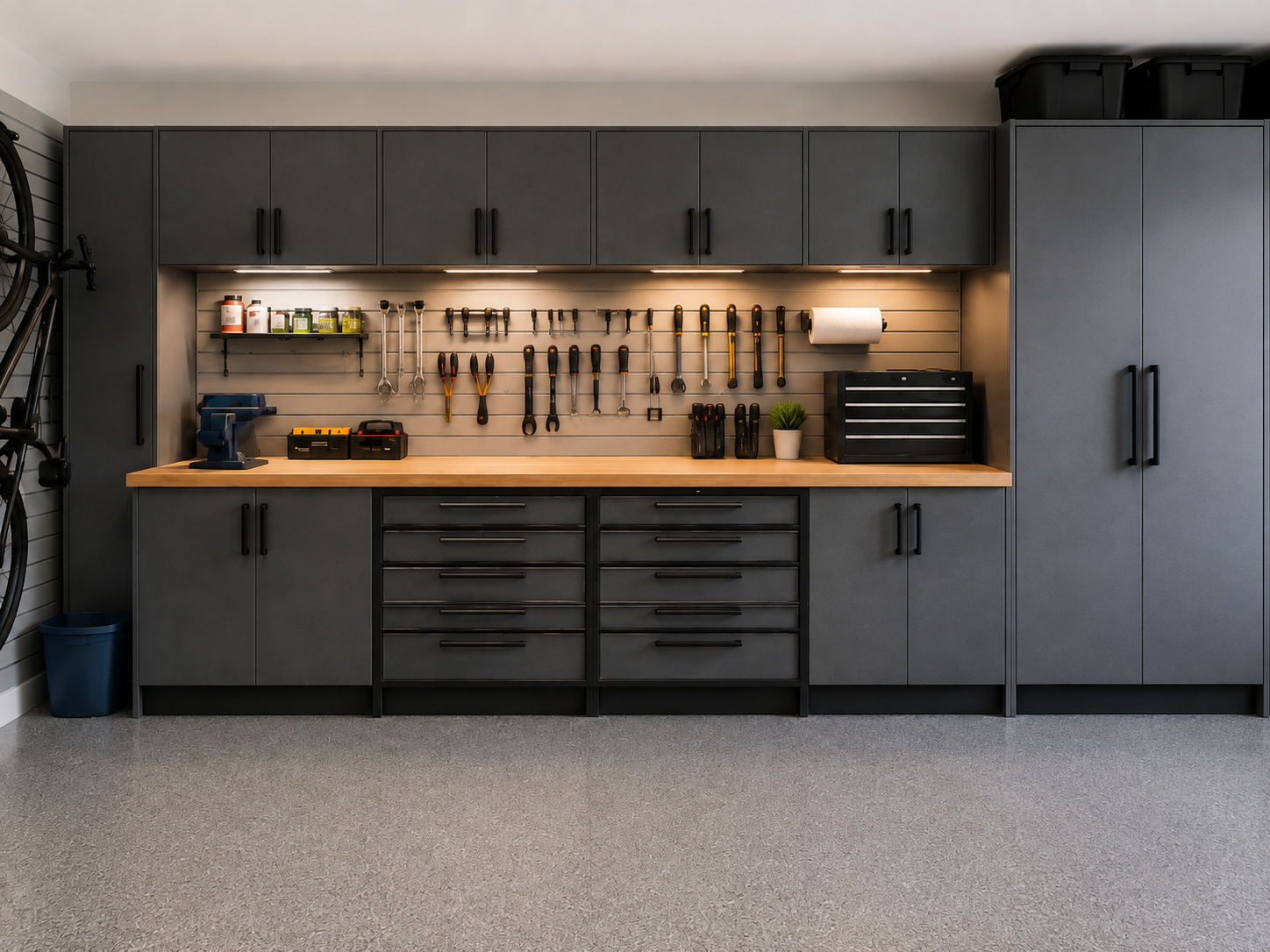
A productive workbench zone needs a clear surface, task lighting, and nearby outlets for chargers and corded tools. The bench should act as a work area, not a storage pile, which is why wall panels and disciplined tool drawer organization outperform stacking tools on top.
Move storage upward with wall panels, shallow cabinets, or pegboards above the bench. Vertical storage preserves the work surface, and it also shortens setup time because the most-used hand tools stay visible without covering the bench.
Add a small charging shelf with cable management for battery chargers so lithium-ion batteries are stored off the bench and away from wet zones.
Fastener and Small-Part Zone: Stop the “Mystery Hardware” Pile
Small hardware becomes clutter when categories are vague, not when quantities are large. Use drawer organizers or a dedicated small parts organizer for screws, anchors, bits, blades, and specialty fasteners, then standardize container sizes so replacements fit the same footprint.
Store these items in drawers or bins behind doors when possible for better dust control. Closed storage matters in Utah garages because Great Salt Lake dust can contain metals such as arsenic and lead, and fine particles (PM2.5) can stay airborne longer than larger dust, increasing the chance it settles into open trays over time.
Choose the Right Storage Type: Cabinets vs. Slatwall vs. Shelving vs. Overhead
The best garage storage systems match each item’s weight, frequency of use, and need for protection from dust or temperature swings. Storage choice is less about style than about function, and the wrong system usually creates a second round of clutter within months.
Use vertical space first because reclaimed floor area improves parking clearance and makes sweeping easier. Most garages perform best with a combination of cabinets, slatwall, shelving, and overhead storage rather than a single product trying to do every job.
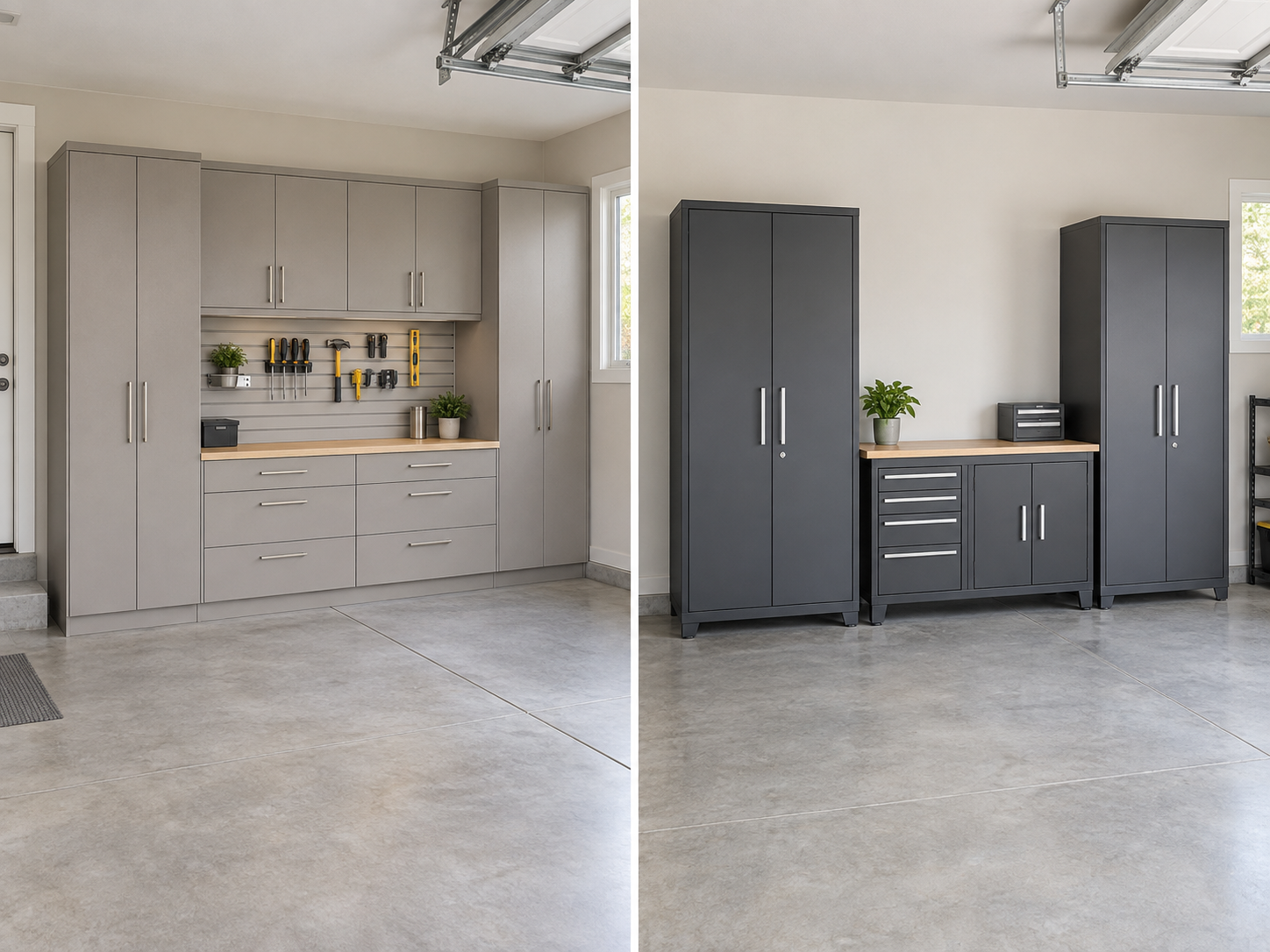
Garage Cabinets: Best for Clean, Protected Tool Storage
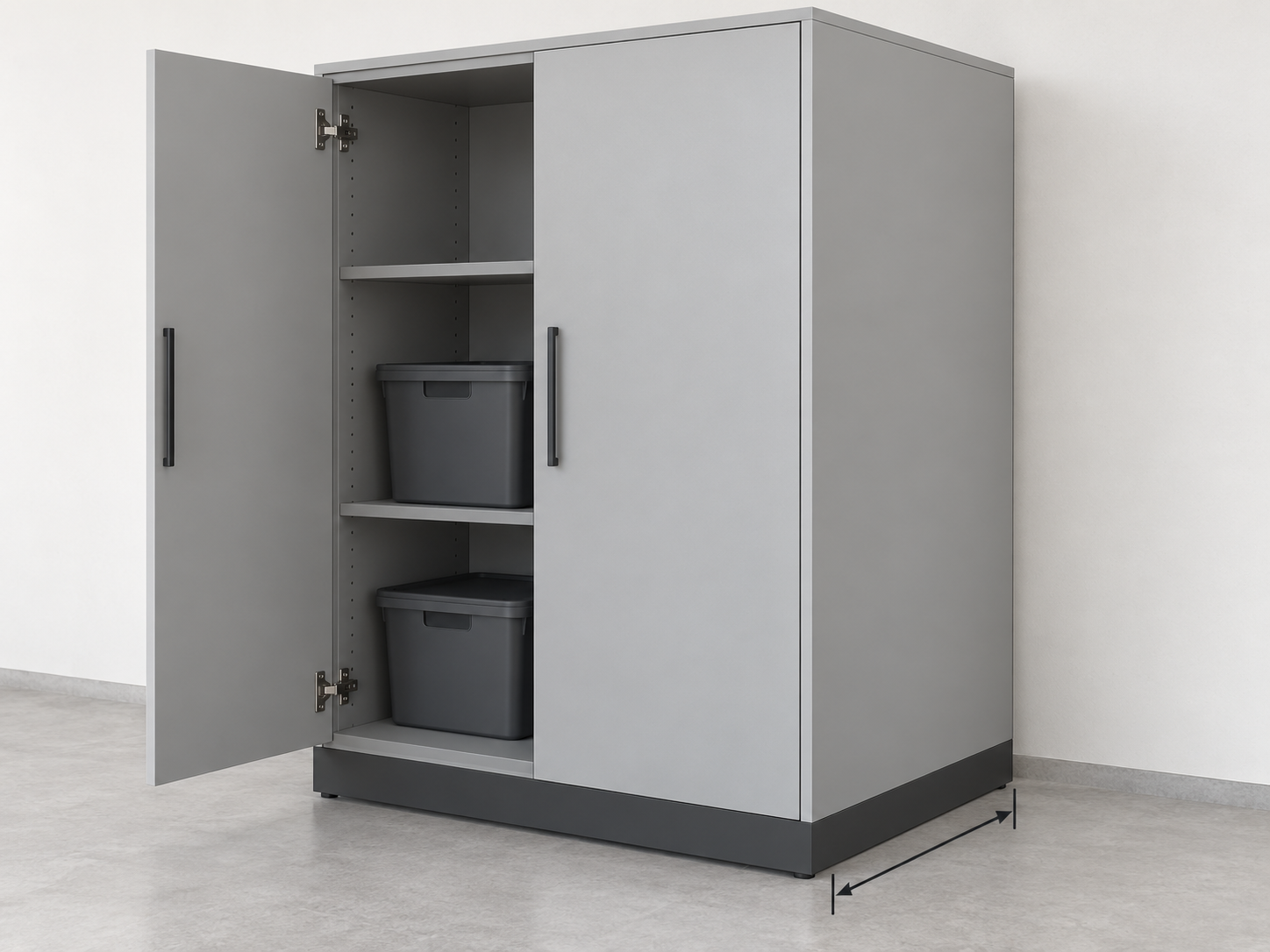
Garage cabinets work best for power tools, chemicals you want out of sight, and high-value equipment that should stay cleaner than open-wall storage allows. Custom garage cabinets with adjustable shelves help homeowners adapt as tool collections change, which is more practical than fixed compartments that lock you into one layout.
Look for wall-mounted construction to keep cabinets off the slab and to simplify sweeping, especially when road salt and slush get tracked in during winter. Wall-mounted garage cabinets also make floor cleaning easier and reduce risk from minor water intrusion. In Utah garages that see tracked-in snow, lifting storage off the slab protects cabinet bases and keeps the lower area easier to inspect and clean.
Cabinet usability matters too: hinged doors are simple and durable, sliding doors can help in tight aisles, and soft-close hardware reduces slamming in high-traffic family garages.
If you are comparing value, confirm the warranty term and what it covers (cabinets, hardware, finish), plus any installation or use conditions that affect coverage.
For homeowners who prefer metal garage storage, powder-coated steel cabinets and drawers can be a good fit for durability and wipe-down cleaning.
Slatwall and Wall Panels: Best for Visible, Grab-and-Go Tools
Slatwall panels are ideal for hand tools, extension cords, hoses, and frequently used accessories. Tool hooks make retrieval fast, but the larger benefit is behavioral: visible storage creates a stronger return habit because the empty spot shows what is missing.
Add baskets for gloves, tape, and small accessories so loose items do not migrate back onto the bench. Use labeled hook zones or simple outlines so each tool returns to the same place. That visual discipline turns garage slatwall from display space into a repeatable system.
For bikes, pair wall panels with bike hangers so tires and pedals stay off the floor and the parking path stays clear.
Heavy-Duty Wall Shelving: Best for Totes and Medium Bulky Items
Heavy-duty shelving is the right fit for labeled bins, shop supplies, and mid-season gear that does not need cabinet doors. Heavier loads should stay lower because safe access determines whether a system remains usable after the first month.
If you use a wire shelf, add a flat deck like 1/4 inch plywood so bins and small boxes sit stable without tipping. Check the weight rating before installation and confirm anchoring into studs. Many heavy-duty shelving units are rated anywhere from 500 lbs to 2,000 lbs per shelf depending on the model and configuration, but the rating only matters if the structure and fasteners support the same load path.
As a planning rule for long shelf runs, use the manufacturer’s published load rating for your exact shelf length and install method, and size anchoring and framing to match.
Overhead Racks: Best for Seasonal and Bulky Storage
Overhead garage storage frees wall space for tools by moving holiday décor, camping bins, and winter storage totes above the vehicle envelope. This placement works well for low-frequency items because retrieval effort naturally discourages daily-use clutter from drifting overhead.
If you want a dedicated service overview, see overhead garage storage for options and common install considerations.
Maintain clearance for the garage door, opener, lights, and tall vehicles before choosing rack depth. Homeowners comparing options can review the best overhead garage storage racks for utah homes for examples tied to local layouts.
Utah-Specific Considerations: Temperature, Dust, Snow Gear, and Outdoor Lifestyles
Utah garages can see dust from the receding Great Salt Lake that may contain metals such as arsenic and lead, plus temperature swings that can damage sensitive items stored without climate control. Closed cabinets and easy-to-sweep floors reduce how far dust and salt migrate into tool areas and into the house.
In areas like Park City and the Salt Lake Valley foothills, snow season adds more moisture and road salt, so keep a wet zone separate from clean tool storage. A dedicated winter zone keeps ski gear, boots, helmets, and gloves from soaking unrelated storage. Salt Lake City households often need their garage to support skiing, biking, camping, and fishing in the same footprint, which makes seasonal separation more valuable than adding more random shelves.
Wet and Muddy Gear Strategy (Ski Boots, Shovels, Traction Aids)
Use drip trays or boot mats below hooks or shelves where wet gear can dry without spreading water across the slab. Wet storage should stay away from power tools and chargers because moisture concentrates corrosion risk in the area people use most.
Keep snow shovels, traction aids, and ice melt near the main garage entry. Storm access matters more than neatness here, since emergency tools stored deep in the garage tend to get left out afterward.
Bike Storage That Doesn’t Eat the Whole Garage
Bikes consume parking space when they lean, sprawl, or block aisle movement. Pivoting bike storage racks such as Steadyrack-style systems keep bikes tight to the wall, and grouped accessories on garage slatwall nearby reduce the secondary clutter of pumps, helmets, and tubes.
For more detailed layouts, see best garage bike storage solutions for utah families or the brand’s bike storage examples. A bike zone succeeds when one person can remove or return a bike without moving a car or another bike first.
DIY Tool Storage Ideas That Work (Without Overbuilding)
The highest-impact DIY changes are wall storage, labeling, and dedicated zones. These improvements change behavior faster than elaborate carpentry because they reduce decision-making at the moment someone puts an item away.
Choose modular products so the system can evolve with new tools and hobbies. Garage layouts fail when every inch is built around a current collection with no room for expansion or seasonal rotation.
Pegboard and Hook Layouts for Hand Tools
Pegboards work well when tools are arranged by workflow, such as measuring, cutting, fastening, and finishing. Workflow grouping shortens project setup because the tools used together are stored together, which is more efficient than alphabetizing or grouping by brand.
Leave expansion space between categories. A pegboard that starts at full capacity forces reshuffling every time a new tool arrives, which breaks consistency and invites clutter.
Budget Shelving Upgrades Inspired by Real-World Garage Builds
Many homeowners improve basic garage shelving by adding plywood tops over wire shelves for better stacking and less wobble. That upgrade increases surface usability, especially for bins and boxed supplies that tilt or sag on open wire.
If you want a quick liner, a cardboard liner can work short-term, but 1/4 inch plywood lasts longer and supports heavier storage totes without bowing. Use consistent labeled bins across the shelf run so categories return to the same location. If you are comparing layouts and finishes, garage flooring trends in utah what salt lake city homeowners are choosing also shows how cleaner floors support long-term organization.
Garage Gardening Station: Keep Garden Tools in One Place
A small garage gardening station can be as simple as a wall panel with hooks for garden tools, a shelf for gloves and twine, and a bin for seed packets. Keeping dirty tools in one zone helps protect your clean tool drawers and reduces dust spread.
Common Mistakes Salt Lake City Homeowners Make (and How to Avoid Them)
Buying storage before mapping zones is the mistake that creates the most waste. Homeowners often fill wall space with products that look organized but force tools, sports gear, and seasonal items into the same daily path.
Heavy items stored too high create both injury risk and avoidance behavior. When lifting is awkward, people stop putting things back, and the floor becomes the default storage surface again.
Overloading Shelves and Missing Studs
Use rated hardware and anchor heavy systems into studs rather than relying on drywall anchors. The shelf is only as strong as its attachment point, so published capacity numbers mean little when installation ignores the wall structure.
Follow a heavy-low, light-high rule and inspect fasteners seasonally. Utah temperature swings and repeated loading cycles can expose weak mounting choices faster than homeowners expect.
No Labeling or Category Boundaries
Label bins by category and season, then place a simple storage map inside a cabinet door. Labels reduce memory dependence, which matters in family garages where multiple people use the same system.
Create visual boundaries with one shelf per category or one wall panel per tool group. Distinct garage zones reduce cross-contamination between daily tools and occasional gear, which is the main cause of re-clutter in shared garages.
Example Layouts for Salt Lake City Garages (1-Car, 2-Car, and Workshop Corners)
A strong layout protects tool access while rotating seasonal gear away from prime space. The most durable systems also include a reset routine, such as a 10-minute weekly return of loose tools, helmets, and chargers to their assigned zones.
1-Car Garage: One Tool Wall + One Overhead Rack
Use one wall for a compact bench with slatwall or pegboard above it, then add cabinets for power tools below or beside the bench. One overhead rack can hold holiday bins and camping totes, keeping the floor open for a single vehicle bay.
2-Car Garage: Split Zones Left/Right With a Clear Center Path
In a 2-car layout, place the tool and workbench zone on the left wall and sports or yard storage on the right wall, with seasonal bins overhead. This split creates clean garage zones and preserves a center path for parking, walking, and loading.
Add a bike rack cluster near the garage door so rides start without shuffling vehicles. Homeowners in nearby communities often use the same logic in projects like draper garage storage, where access patterns matter as much as square footage.
Workshop Corner: High-Frequency Tools Within Arm’s Reach
A workshop corner should place measuring tools, marking tools, bits, and blades in drawers near the dominant hand side of the bench. Clamps, cords, and safety gear belong on nearby hooks so setup and cleanup happen within one standing position.
Use a dedicated charging shelf with cable management for batteries and cordless tools. Charging clutter spreads fast, and one controlled station prevents tangled cords from overtaking the bench.
What Not to Store in a Garage (Safety and Damage Prevention)
Some items fail in garage conditions long before homeowners notice visible damage. Utah’s hot summers, cold winters, and moisture from snow gear make garages poor storage environments for temperature-sensitive, moisture-sensitive, or ignition-prone items.
Safer alternatives include indoor closets, utility rooms, or sealed cabinets where manufacturer guidance allows. The point is not to empty the garage of everything delicate, but to reserve it for items that can tolerate the environment.
Temperature-Sensitive and Fire-Risk Items
Avoid storing paint where it can freeze or overheat, and be cautious with lithium-ion batteries stored in uncontrolled temperatures. Avoid storing some paints, adhesives, and batteries in extreme temperatures unless the manufacturer label says the product can handle those conditions. Temperature swings shorten product life and can create performance or safety issues long before the container looks damaged.
Store propane cylinders and flammables according to local guidance and away from ignition sources. A tidy garage is not automatically a safe garage if hazardous materials are stored in the wrong place.
Items That Attract Pests or Mold
Do not keep open food in the garage, and store pet food sealed and off the floor if it must remain there. Food odors attract pests, and once pests settle into stored cardboard and fabric, the cleanup problem grows beyond organization.
Dry wet gear before sealing it in cabinets or bins. Mold and mildew often start in well-intentioned storage systems that trap moisture without airflow.
If you want quick inspiration, communities like r/garageporn can be useful for layout ideas, but prioritize safety, weight ratings, and a zone-based storage map over aesthetics.
When you want a finished look with consistent fit and function, professional installation can help align cabinets, anchor heavy-duty systems correctly, and confirm door clearance for hinged doors or sliding doors.
Some homeowners also prefer systems labeled made in the USA for material sourcing and consistency, especially when comparing metal garage storage and cabinet hardware quality.
A garage works better when storage follows behavior instead of fighting it. For Salt Lake City homeowners, the most durable tool storage plan is a zone-based system that respects climate, gear volume, and the daily reality of how the garage is used.