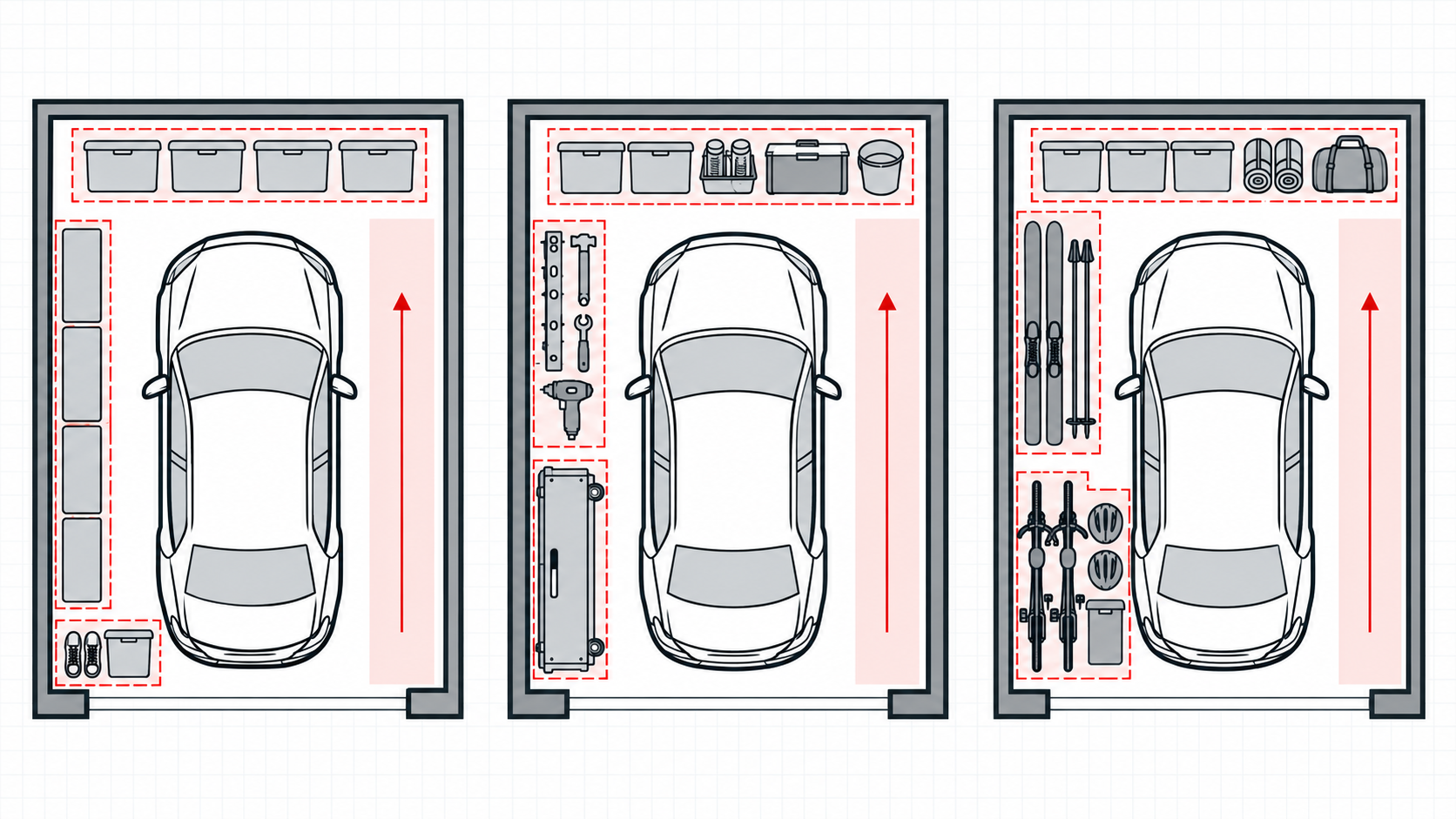
Choosing garage cabinets starts with deciding how much planning, installation work, and flexibility your space requires. When comparing custom garage cabinets vs. store-bought systems, the better choice depends on your belongings, garage dimensions, parking needs, and expectations for the finished design.
Here, custom refers to a professionally designed and installed cabinet layout using the available sizes, finishes, and accessories in the selected product line. It does not necessarily mean every cabinet is fabricated to any requested dimension.
This guide compares fit, capacity, materials, installation, flexibility, and overall value.
Start with how you need the garage to work
The shared goal of garage organization is to clear clutter, protect belongings, and reclaim room for vehicles. Begin by listing your tool storage, bike storage, and sports equipment storage needs, separating frequently used items from bulky belongings and seasonal storage.
Measure parking space before assigning space to storage. A cabinet that fits the wall can still interfere with vehicle doors, walking paths, or a garage workbench.
Store-bought systems include pre-sized cabinet sets, modular cabinets, and ready-to-assemble cabinets. The homeowner or a hired contractor typically plans the layout, coordinates any off-the-shelf shelving, and completes installation.
Custom-designed garage systems pair professional planning with installation. A design consultation can help coordinate cabinets, garage shelving, slatwall, overhead racks, and a workbench into a custom storage system within the options offered by the selected product lines.
Custom and store-bought garage cabinets at a glance
Both approaches can produce useful, attractive storage. Compare the specific construction, available dimensions, and service scope instead of assuming all custom cabinets are more durable or every retail product is poorly made.
Feature comparison table
Layout fit and storage capacity
Standard cabinet dimensions can work well along an open wall. In a tighter garage layout, available widths and depths may leave gaps or conflict with garage obstacles such as windows, door tracks, outlets, and utility equipment. Professional planning can help arrange suitable modules, but it does not eliminate the size limits of the chosen product line.
Keep required working and service clearances around electrical panels, water heaters, and other equipment. Confirm applicable electrical panel clearance and water heater clearance requirements with a qualified professional before finalizing cabinet placement.
Judge capacity by usable interior space rather than exterior dimensions alone. Measure the bins, tools, and supplies you intend to store, then compare shelf spacing, drawer depth, door access, and shelf load capacity.
Vertical storage can handle items that do not belong inside cabinets. Slatwall hooks, baskets, and shelves provide wall storage for frequently used equipment, while ceiling storage can provide a place for seasonal items when structural conditions, clearances, and load ratings allow.
What professional design adds
A designer can help resolve competing needs, such as preserving parking clearance while fitting a workbench and enclosed storage along the same wall. Space optimization means making the garage easier to use, not simply filling every available surface. Ask which cabinet sizes and configurations are available and where the proposed layout involves compromises.
Perfect Garage Storage’s cabinet design process includes a custom 3D rendering so homeowners can review the proposed layout. Fully-customized garage designs with 3D renderings help visualize the overall arrangement while still working within the selected product line’s available options. Discuss the design process and approval steps during your consultation.
Materials, construction, and everyday durability
Garage cabinet options include powder-coated steel, engineered wood panels, and laminate-finished systems. Material labels alone do not establish cabinet durability: compare panel thickness, edge treatment, joinery, the cabinet back panel, hardware, and attachment requirements.
Consider garage temperature swings, garage moisture, road salt, and dust when evaluating finishes and exposed edges. Check the product’s stated suitability for your garage conditions rather than assuming either metal or engineered wood is the better choice in every setting.
Review shelf and drawer ratings for the exact configuration you are buying, including the load limits and extension of drawer slides. Adjustable shelves should accommodate your belongings without exceeding the manufacturer’s load limits, and drawers should suit the tools and supplies planned for them.
Warranties differ by product line, installation method, and exclusions. Perfect Garage Storage’s Signature Series cabinets carry a lifetime warranty, but review the applicable terms, including who handles replacement parts and warranty requests.
Installation, flexibility, and a coordinated system
Store-bought cabinets may require receiving and inspecting multiple boxes, assembling cases, leveling adjoining units, completing wall anchoring, and adjusting doors. If you hire a contractor, include that work in the comparison rather than treating the retail purchase price as the finished cost.
Follow the manufacturer’s installation and anchoring instructions for the specific cabinet and wall construction. Confirm that whoever installs the system is responsible for suitable attachment and final adjustments.
Professional installation reduces the homeowner’s hands-on workload. Confirm what the quote includes, who prepares the garage, and how installation issues will be addressed.
Modular retail systems may be easier to relocate or expand, but future additions depend on compatible products remaining available. Professionally designed systems can also include adjustable shelves and movable accessories, so compare the flexibility of the actual components.
For a full-garage upgrade, consider how enclosed cabinets, open shelving, slatwall, overhead garage storage, and a workbench will function together. Coordinated surfaces across cabinet fronts, countertops, and optional flooring can create a unified appearance with either approach when compatible finishes are available.
Which garage cabinet option fits your situation?
Choose store-bought cabinets when standard modules fit comfortably, your storage needs are straightforward, and you can manage planning and installation yourself or through a contractor. They can also suit a temporary workspace where portability matters.
Choose a professionally designed and installed system when you want help resolving a difficult layout, coordinating several storage types, or creating a dedicated workbench wall. Its value comes from the planning and service solving specific problems, not from the word custom alone.
For either route, compare the complete installed cost and the proposed layout side by side. A less expensive cabinet is not a saving if it cannot hold your equipment or leaves too little room to park, while a more extensive system is unnecessary if a few well-chosen modules meet your needs.
Make the decision with a short checklist
Before purchasing either system:
- Measure wall space, ceiling height, walking routes, and vehicle clearance.
- List heavy, bulky, seasonal, and daily-use items, including their dimensions.
- Mark doors, windows, outlets, utilities, and required service clearances.
- Compare available cabinet sizes, construction, shelf and drawer ratings, and warranties.
- Confirm who handles assembly, wall anchoring, installation, and follow-up service.
- Identify any shelving, slatwall, bike racks, ceiling storage, or workbench components needed beyond cabinets.
- Compare complete project costs, installation timelines, and options for future changes.
Perfect Garage Storage Solutions helps Salt Lake City homeowners plan storage around their space and routines. Schedule a free garage storage consultation with Perfect Garage Storage to discuss your storage needs and the custom 3D design process. Use the proposed layout and quote as a practical comparison point before committing to either route.