Utah ranks 8th in the nation for bike theft, and plenty of those bikes go missing from home. This guide covers bike theft in Utah and how to store bikes safely in your garage, from where bikes hang to how they lock, so an open door or a quick grab doesn't cost you a $1,600 ride.
Here is the local data, a practical setup for secure bike storage, and what to do if a bike disappears.
Utah Bike Theft at a Glance
Why Secure Bike Storage Matters in Utah
Utah rides. Bicycling added $73 million to the state's outdoor recreation economy in 2023, a 43% increase in value-added from 2022, according to the Utah Division of Outdoor Recreation. Mountain bikes and e-bikes can be a serious household investment, and a garage gives them weather protection. Secure bike storage takes more than a roof, though.
Utah's rate of 84 bikes stolen or vandalized per 100,000 people is nearly double the national rate. These figures support practical prevention at home, not assumptions about any particular neighborhood.
A Garage Is Convenient, Not a Vault
Opportunists look for unsecured bikes through open garage doors, especially bikes parked near the opening. Salt Lake Tribune reporting from July 2024 described two bikes locked with U-locks in a covered apartment garage in the Avenues that were cut free and stolen.
A rack organizes parking. Layered security is what slows a thief down.
Build a Safer Garage Bike Storage Setup
Good garage bike storage does four things: keeps bikes out of sight, mounts them to structure, locks the frame, and preserves the records you need for recovery. Each step should be easy enough to use every day.
Keep Bikes Out of Sight and Away From the Door
Store bikes beyond the door line and outside the view from the street. Close the garage whenever it's unattended, and use smart-opener alerts or an auto-close setting as a backup.
A cabinet or cover can hide a valuable bike. Keep screwdrivers, cutters, and other tools in closed storage so a thief can't use your own tools.
Choose a Rack That Is Anchored to Structure
A bike rack should be secured to the floor, walls or ceiling, not just set in a corner. Anchor wall racks into wall studs and ceiling storage into joists, following the manufacturer's instructions. A wooden wall surface or drywall alone does not give adequate support.
Avoid bare metal hooks, weak drywall anchors, and freestanding stands for expensive bikes. Freestanding stands tip easily and offer nothing to lock to. Check bike tire width, wheel size, frame shape, and weight capacity before you buy, because rack failure usually comes from a mismatch or a bad mount.
For mountain bike garage storage, vertical and swivel-style racks reclaim the most floor space. Rubber-coated hooks or trays protect rims and paint. Perfect Garage installs bike storage anchored into framing on every job.
Add a Real Secondary Lock Point
Lock the frame to a security-rated anchor, rack or metal loop with a quality U-bolt lock or comparable hardened lock. A storage rack is not automatically a security anchor; a ground or wall anchor bolted into concrete or framing is.
Lock your wheels too when practical, especially wheels with quick release skewers, and take off easy-to-grab bike accessories like lights and computers.
Organize Bikes for a Busy Salt Lake City Household
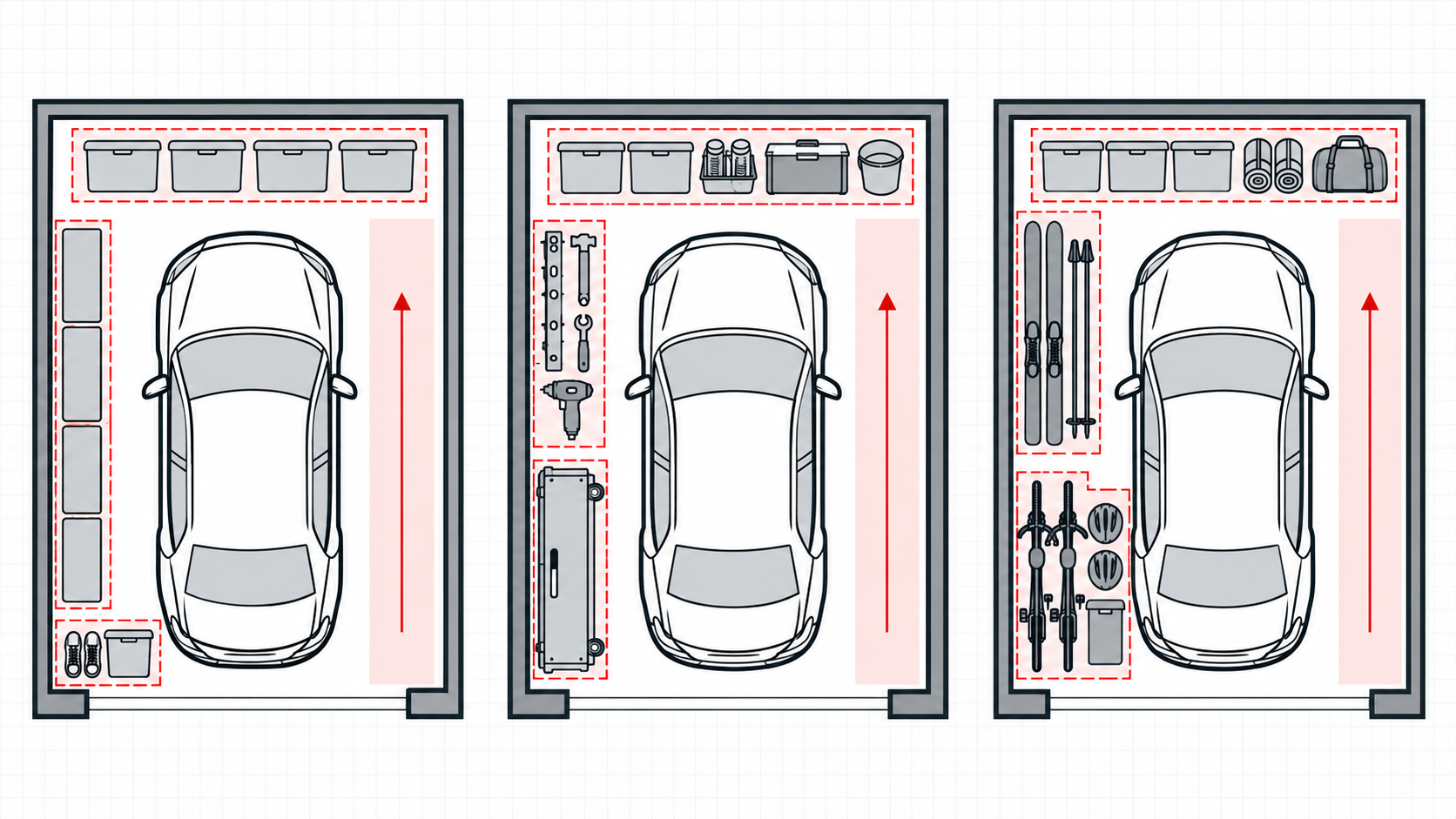
A workable layout leaves room for cars, tools, and outdoor gear without blocking bike access. Keep everyday bikes easy to reach and put seasonal bikes in the less convenient spots.
Avoid leaning bikes against walls. It leads to scratches and tip-overs, tangled brake lines, and blocked walkways. Leave enough space to pull one bike out without moving three others.
Set Heights for Kids, Adults, and Heavy Bikes
Put children's bikes on low hooks or low racks they can use on their own. Vertical racks work well for adults who can lift and roll the bike into place.
E-bikes vary widely in weight, and some are heavier than many racks are rated to carry. Never force a bike onto a rack beyond its published capacity; a floor-level rack with a lock point is often the better choice for a heavy e-bike.
Plan Seasonal Storage With Ski Gear
In Park City and Heber, give skis and bikes their own seasonal zones. Use shelving, slatwall, cabinets, and overhead storage for bins and loose gear instead of stacking it in front of the bikes.
Revisit the setup each spring and fall as riding, skiing, and camping routines change.
Protect E-Bikes and High-Value Mountain Bikes
Give valuable bikes a hidden spot, solid structural support, and a frame lock attached to a security anchor. No rack, cabinet, or lock guarantees a bike won't be stolen, but layers make it a lot harder.
Lockable cabinets can hold helmets, chargers, and small electronics or batteries, as long as storage conditions meet the manufacturer's guidance.
Store and Charge E-Bike Batteries Safely
Follow the manufacturer's battery and charger instructions, including temperature limits. Keep charging areas away from heat, direct sunlight, combustible clutter, and damaged cords.
Inspect batteries and chargers before use and stop using anything damaged. Do not charge unattended overnight in a cluttered garage, and remember a closed cabinet is not automatically a safe charging spot.
Prevent Damage While Bikes Are Stored
Most bikes, including hydraulic disc brake bikes, can hang vertically on a quality rack. If brakes feel soft after storage, a few squeezes usually brings them back; ask a bike shop if it persists. Some riders prefer storing a bike right-side up for long periods, so check your manufacturer's guidance.
Avoid pressure on brake lines, rotors, and cables. For long storage, clean and dry the bike, check tire pressure every few weeks, and keep it out of strong heat to limit UV damage to rubber components. Utah garages swing from hot summers to freezing winters, so climate-controlled storage is a plus for e-bike batteries in particular.
Bike Theft Prevention & Recovery: Document Before It Happens
Clear ownership records help police identify recovered bikes and support insurance claims. Keep them in a cloud folder or somewhere other than the garage.
Create a Photo Inventory and Record Serial Numbers
Photograph both sides of each bike, its serial number, distinctive parts, and accessories. Save receipts and record the make, model, color, size, price, and any unique marks.
Update the photo inventory after upgrades or when a child moves up a bike size.
Register Your Bike and File a Police Report Promptly
Use Salt Lake City Bicycle Registration through Salt Lake City Police, and add your bike to Bike Index as a public recovery record. Local cyclists recommend both.
If a bike is stolen, file a police report right away with the serial number, photos, and identifying details. Save any camera footage or tracker data. An AirTag or similar tracker can give location clues, but police advise never confronting a suspected thief yourself.
The Salt Lake Tribune report cited a study finding that 45% of bike theft victims stopped riding or rode less afterward. Prevention protects more than equipment.
Check Insurance Before You Need It
Homeowners and renters policies may cover bikes, but deductibles, limits, and exclusions vary, and e-bikes are sometimes treated differently from regular bicycles.
Questions to Ask Your Insurance Provider
- Does theft coverage include each bike and its accessories?
- Is the payout replacement cost or actual cash value?
- What deductible and per-item limits apply?
- Does the policy cover this specific e-bike?
- Would scheduled personal property coverage make sense for a high-value bike?
- Are specific locks, storage, or records required?
Review coverage when you buy a new bike or make big upgrades, not after a loss.
Avoid These Garage Bike Storage Mistakes
The most avoidable problems are visible, unlocked bikes near the door; overloaded or poorly anchored racks that risk rack failure; and locks that secure a wheel but not the frame. A layout that's a pain to use also fails, because bikes end up back on the floor.
Use a Simple Monthly Security Check
Test the opener alerts or auto-close. Check locks, anchors, rack fasteners, hooks, and clearances for looseness or wear. Look at what's visible from the street when the door is open, and update records when bikes change.
Create a Garage Layout That Supports Safer Riding
Secure bike storage comes down to a closed garage, bikes out of sight, racks mounted to structure, frame locks, documented ownership, and smart battery habits.
Perfect Garage Storage is locally owned and operated in Utah and installs Steadyrack bike storage anchored to framing, as part of coordinated garage systems that plan for bikes, cars, and family gear together.
A Practical Starting Checklist
- Close and monitor the garage door.
- Move bikes away from street view.
- Anchor racks into studs or joists.
- Lock frames to security-rated anchors.
- Photograph, record, and register each bike.
- Confirm insurance and safe battery charging.
- Make putting bikes away easy for every rider.
Start with visibility and locking, then build the layout around your household's routine. For help planning it, Perfect Garage Storage offers a free in-home consultation and a custom 3D garage design delivered within 1 to 2 business days for review before you commit.